Article
South Africa’s Draft Crypto Rules Lock the Door Behind You
· Wayne H. Pocock
Why the proposed capital flow regime is unworkable, probably partly unlawful, and out of step with the United States
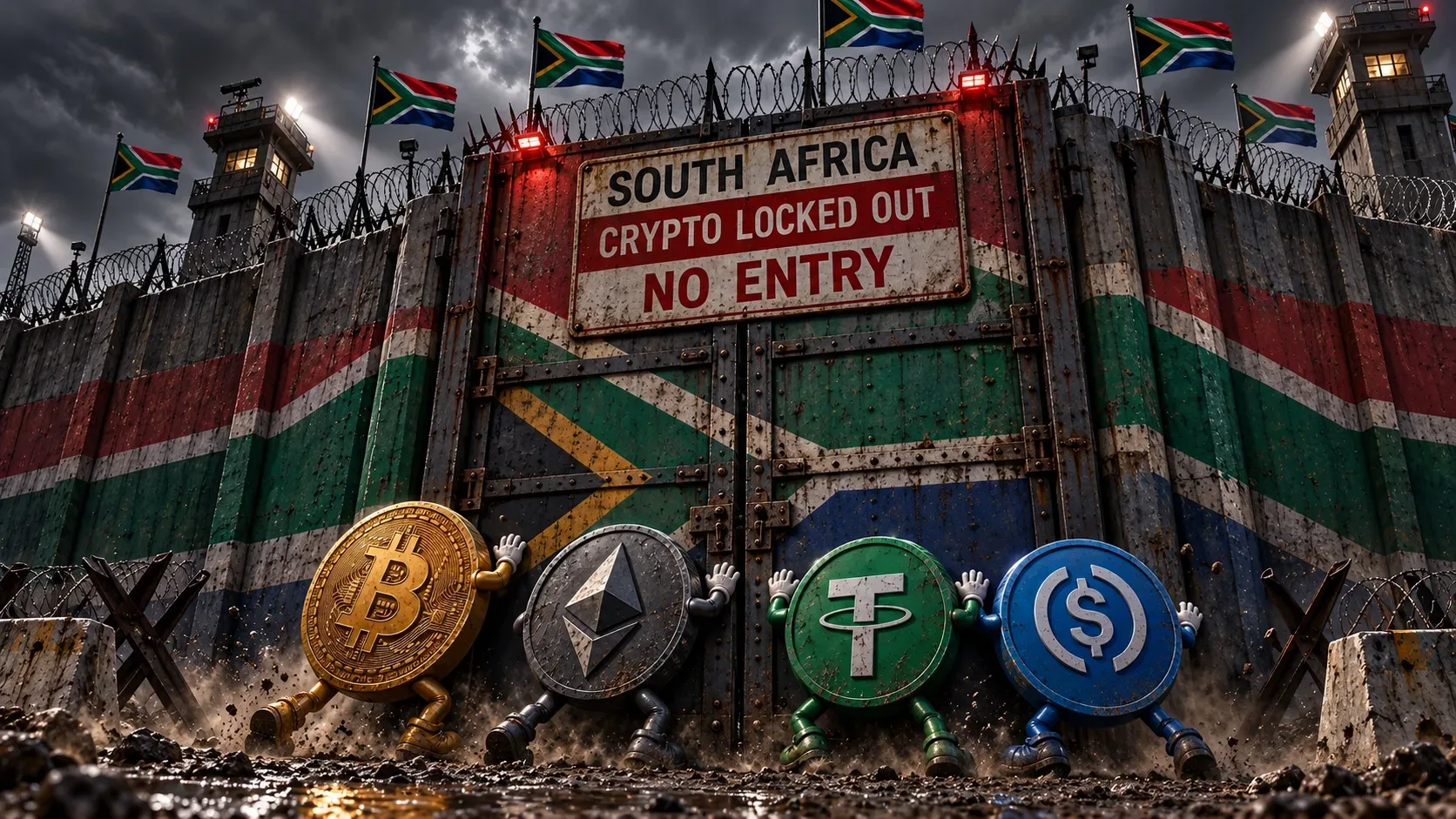
- In Johannesburg and New York, investors ask the same question in both places: can I move my own Bitcoin? In New York the answer is yes. In South Africa the honest answer is “it depends which judge you ask, and the rules are about to get worse.”
Where things stand today
- National Treasury published the draft Capital Flow Management Regulations, 2026 on 17 April 2026 (GN 54520, GG 7375). They will replace the Exchange Control Regulations, 1961. Treasury and the SARB then issued the draft Crypto Asset Manual for Cross-Border Activities on 3 August 2026. Comment on the Manual closed on 30 September 2026.
- Both are still drafts. Treasury and the SARB have admitted something unusual in writing: the Manual was released before they had considered the comments on the Regulations. So the public was asked to comment on a manual built on regulations that were themselves under review.
- The pushback has been loud. More than 200 organisations and nearly 6 300 individuals have signed up to Catastrophe, a coalition of crypto businesses and supporters campaigning for changes to the proposed rules.
The courts cannot agree
- In Standard Bank of South Africa v South African Reserve Bank 2025 (5) SA 289 (GP), Motha J held that cryptocurrency is neither “money” nor “capital” under the 1961 Regulations. He relied on the restrictive interpretation of penal provisions (Oilwell (Pty) Ltd v Protec International Ltd 2011 (4) SA 394 (SCA)) and said the gap was one for the legislature, not the courts.
- A year later, in Mangundhla and Another v South African Reserve Bank and Others (2022/029979) [2026] ZAGPJHC 579 (1 June 2026), Wilson J held that Bitcoin is both money and capital, and that Standard Bank is clearly wrong. He called the contrary argument a form of “magical thinking” and upheld a forfeiture of just under R6 million after some 1 680 BTC, worth about R182 million, was moved to wallets on foreign exchanges.
- The SARB appealed the Standard Bank decision to the Supreme Court of Appeal, and the final position on the exchange control treatment of cryptocurrency remains unknown pending the outcome of the appeal. Until the SCA speaks, South Africans live with two High Court judgments that say opposite things. The Reserve Bank is acting on the one it won.
Problem one: a manual that claims to be law
- The Manual says of its own permissions and conditions that “while they have no statutory force, they have the effect of law.” That sentence should worry every lawyer in the country.
- The principle of legality requires that public power be sourced in law. A manual issued by FinSurv under delegated power cannot create criminal exposure that the enabling regulations do not. Worse, the Manual repeatedly relies on the “draft Regulations” as if they were in force. They are not. A guidance document cannot borrow authority from a draft.
Problem two: “positive bias” in the press release, “default deny” in the rulebook
- Treasury’s April media statement promised a “positive bias” approach with fewer transaction pre-approvals.
- The Manual does the opposite. Section A.4(A)(iv) says an Authorised CASP may not process any cross border crypto transaction “other than those expressly permitted.” Everything not listed is banned. That is a closed list, not a positive bias.
Problem three: your own wallet is treated as a foreign country
- The Manual deems a transfer from a South African exchange to your own non-custodial wallet to be an “export of capital.” It does not matter that the wallet is yours, that you live in Sandton, and that nothing has left the country.
- This goes further than the courts and further than the draft Regulations themselves.
- Further than Wilson J. His reasoning turned on the location of the account. He used the example of drawing cash at an ATM from a foreign bank account. A self custody wallet has no foreign location. It is a private key held by a South African resident in South Africa.
- Further than the draft Regulations. Regulation 1 defines “export of goods or capital” by reference to a transfer “to or in favour of a person who is not resident in the Republic.” Moving coins to yourself does not meet that test.
- A manual that goes beyond the regulation it implements is exposed to review as ultra vires.
Problem four: the one way door
- Here is the trap. Table 1 and Table 2 of the Manual classify a transfer from a non-custodial wallet into a South African exchange as a “non-permissible transaction.” That applies to residents, non-residents and foreign nationals alike.
- So once coins sit in your own wallet, the regulated system will never take them back. Consider who that catches:
- People who bought Bitcoin years ago and kept it in cold storage.
- Miners, whose coins arrive in a self custody wallet by design.
- Anyone who received crypto as payment or as a gift.
- Treasury’s 15 May statement said the Regulations do not apply retrospectively and do not criminalise possession. That may be the intention. The tables say something else: these holders can keep their coins, but they can never sell them through a licensed local platform.
- The practical result defeats the stated purpose. FinSurv says it wants visibility over illicit flows. Blocking re-entry pushes people towards peer to peer trades and offshore platforms, which is exactly where the Reserve Bank cannot see.
Problem five: companies are shut out entirely
- Under the Manual, only individuals may externalise crypto, within the R2 million single discretionary allowance or the R10 million foreign capital allowance. Resident entities “may not enter into crypto asset transactions deemed as import or export of capital.” No exceptions, no application route.
- A South African company may pay a foreign supplier through SWIFT. It may not make the same payment in a regulated dollar stablecoin through a licensed local CASP. The economic substance is identical. Only the technology differs. That is not technology neutrality. It is technology discrimination, and it isolates the local fintech and Web3 sector from global settlement rails.
- The joint statement of 3 August confirms that the approach “neither distinguishes between different types of crypto assets.” A regulated dollar stablecoin is treated the same as a speculative memecoin.
Problem six: the regulations say more than Treasury admits
- Read the text of the draft Regulations, not the press statements:
- Regulation 1 defines “capital” as anything with a monetary value or that can be converted to money, including crypto assets, excluding only immovable property. That is almost everything a person owns.
- Regulation 8 requires a declaration of crypto assets above a threshold within 30 days, and sub-regulation (3)(b) says the person “must sell” them at a price set by reference.
- Regulation 10 requires every person in the Republic to declare any crypto asset within 30 days of obtaining it. Regulation 10 contains no threshold. Once declared, under regulation 10(2), the asset “may not be sold, transferred or otherwise disposed of” without permission.
- Regulation 4 gives border officials power to demand that travellers declare and produce crypto assets, and to search them.
- Regulation 25(5) obliges an owner to hand over passwords and PINs for forfeited crypto.
- Regulation 29 carries a fine of up to R1 million or the value of the asset, imprisonment of up to five years, or both.
- Treasury says the forced sale concerns are “misplaced.” Perhaps. But courts interpret the words of a regulation, not a media statement. If the intention is narrower, the text must say so.
Problem seven: careless drafting in a penal instrument
- A regulation that can send a person to prison must be precise. This draft is not. Examples from the text itself:
- Reg 4(7)(a) forfeits items seized “under subregulation (3) or (4),” but those provisions govern searches; seizure powers appear in (5) and (6).
- Reg 4(6)(b) permits seizure of “currency, gold or securities” but, unlike surrounding provisions, omits crypto assets.
- Reg 5(4) is “subject to paragraph (b),” but no paragraph (b) exists.
- Reg 8(3)(b) refers to the price “referred to in paragraph (b),” thereby referring to itself.
- Regs 8(5) and 12(4) are “subject to regulation 21(6),” but regulation 21 has no sub-regulation (6).
- Reg 23(5) cites “regulation 11(2)” for foreign-asset obligations, but regulation 11 concerns prescribed currencies.
- Reg 26(2) cites “regulation 22(1)(a),” but regulation 22 concerns forms.
- Our courts read penal provisions restrictively and resolve doubt in favour of the subject. Every one of these errors is a future review application.
Problem eight: consulting on half a framework
- The Manual says the reporting categories, the Business and Technical Specifications and the Operations Manual will be published “once the policy framework has been formally adopted.” Stakeholders were asked to comment without seeing how compliance would actually work.
- Two further points deserve attention:
- Every Authorised CASP needs at least R5 million in ring fenced unimpaired capital, on top of an FSCA licence and FIC registration. Three regulatory gates will squeeze out smaller local players.
- Section A.4(A)(xii) tells CASPs that the draft Regulations “entitle them to call for any information and to search any premises.” Search powers belong to state officials under regulation 20, with constitutional safeguards. They should not be handed to private companies through a manual.
What a sound regime would look like
- Treat transfers by a resident to his or her own wallet as domestic, with travel rule data and SARS reporting already in place.
- Allow coins back into the regulated system on a source of funds declaration.
- Create a capped, reportable route for companies, mirroring what they may already do through Authorised Dealers.
- Distinguish regulated stablecoins from speculative tokens.
- Fix the drafting, publish the full technical package, and put the core rules in the Regulations, not a manual.
- The monitoring tools already exist. PCC 61 provides practical guidance to CASPs on implementing the travel rule as directed in Directive 9, which transposes FATF Recommendation 16 into the FICA regime. From 1 March 2026, SARS began receiving detailed transaction data from crypto platforms under the Crypto Asset Reporting Framework. The state can already see these flows. A blanket ban adds friction, not visibility.
South Africa and the United States: Where the Risks Sit
- For anyone trading, investing in or building crypto across both jurisdictions, the gap is wide.
What crypto is, legally
- South Africa: money and capital for exchange control purposes, per Wilson J, pending the SCA. The draft Regulations would codify this.
- United States: property for federal tax purposes. On securities status, as of the 17 March 2026 SEC and CFTC joint interpretation, Bitcoin and Ether are expressly classified as non-security digital commodities under a new five-category taxonomy. That is an agency interpretation, not a statute. The CLARITY Act failed a procedural vote in the Senate by 49 to 50 on 15 September 2026, far short of the 60 needed. A future administration could change course.
- The risk: both systems rest on unsettled foundations. South Africa awaits its appellate court. America awaits Congress.
Moving your own coins
- United States: no exchange controls. A person may move Bitcoin from an exchange to a personal wallet, or abroad, without permission. Sanctions and anti money laundering rules still apply.
- South Africa (as proposed): every move off a local exchange to a foreign platform or your own wallet is a reportable export within your annual allowance. Above R2 million you need a SARS tax compliance PIN. Re-entry from your own wallet is barred.
- The risk: a South African resident living in New York who sends coins from Luno to a US self custody wallet may not be able to bring them back through any licensed South African platform.
Stablecoins
- United States: the GENIUS Act became law on 18 July 2025 and creates a federal framework for payment stablecoins. New York is moving to align. On 22 July 2026, NYDFS issued a proposed rule to add 23 NYCRR Part 202 governing the issuance of payment stablecoins, to take effect upon the effective date of the GENIUS Act.
- South Africa: no distinction between stablecoins and other tokens, and companies are barred from cross border crypto use.
- The risk: US firms will build regulated dollar payment rails while South African firms are told to use slower and dearer bank channels.
Licensing
- New York: a BitLicense or limited purpose trust charter from NYDFS for virtual currency business involving New York residents, plus federal money transmitter registration.
- South Africa: an FSCA licence, FIC registration as an accountable institution, and, under the proposals, FinSurv authorisation with R5 million minimum capital.
Creating or issuing tokens
- United States: the main risk is securities law. The SEC taxonomy narrows that risk but a token sold as an investment contract can still be a security.
- South Africa: a resident company that raises capital from foreign investors in crypto would be making a non-permissible import. Regulation 17 separately controls issues of capital above a threshold. In practice, a local token raise from offshore investors is closed under the draft.
Tax and reporting
- Both countries are moving to full transparency. South Africa has the travel rule under Directive 9 and CARF reporting to SARS. The United States has broker reporting on Form 1099-DA. Americans are taxed on worldwide income regardless of where they live.
- The risk for cross border clients: double reporting, the SARB declaration duty under draft regulation 10 within 30 days, and different tax events for the same transaction.
Enforcement
- United States: no penalty for moving your own lawful assets abroad.
- South Africa: forfeiture, as Mr Mangundhla and Ms Dangaiso learned, and under the draft, criminal fines and imprisonment. Note Wilson J’s own unease that forfeiture against Ms Dangaiso, whose account was used by another, might be disproportionate. No such case was made out, so the order stood. Lending your account or your allowance is dangerous, and the Manual now calls it a simulated transaction.
The bottom line
- Exchange control has a legitimate purpose. The SCA in SARB v Leathern NO 2021 (5) SA 543 (SCA) and the Constitutional Court in SARB v Shuttleworth 2015 (5) SA 146 (CC) confirm it. Nobody serious argues that crypto should be a free pass to move R182 million offshore.
- But the drafts confuse control with prohibition. They treat a resident’s own wallet as a foreign country, lock coins out once they leave, bar every company from the rails the rest of the world is adopting, and do all this through a manual that admits it has no statutory force. Wait for the SCA. Fix the text. Regulate the risk, not the technology.
- This article is general commentary and not legal advice. The Regulations and Manual are drafts and may change.
Sources: Draft Capital Flow Management Regulations, 2026 (GN 54520, GG 7375); Treasury and SARB media statements of 17 April, 15 May and 3 August 2026; draft Crypto Asset Manual for Cross-Border Activities; Standard Bank v SARB 2025 (5) SA 289 (GP); Mangundhla v SARB [2026] ZAGPJHC 579.